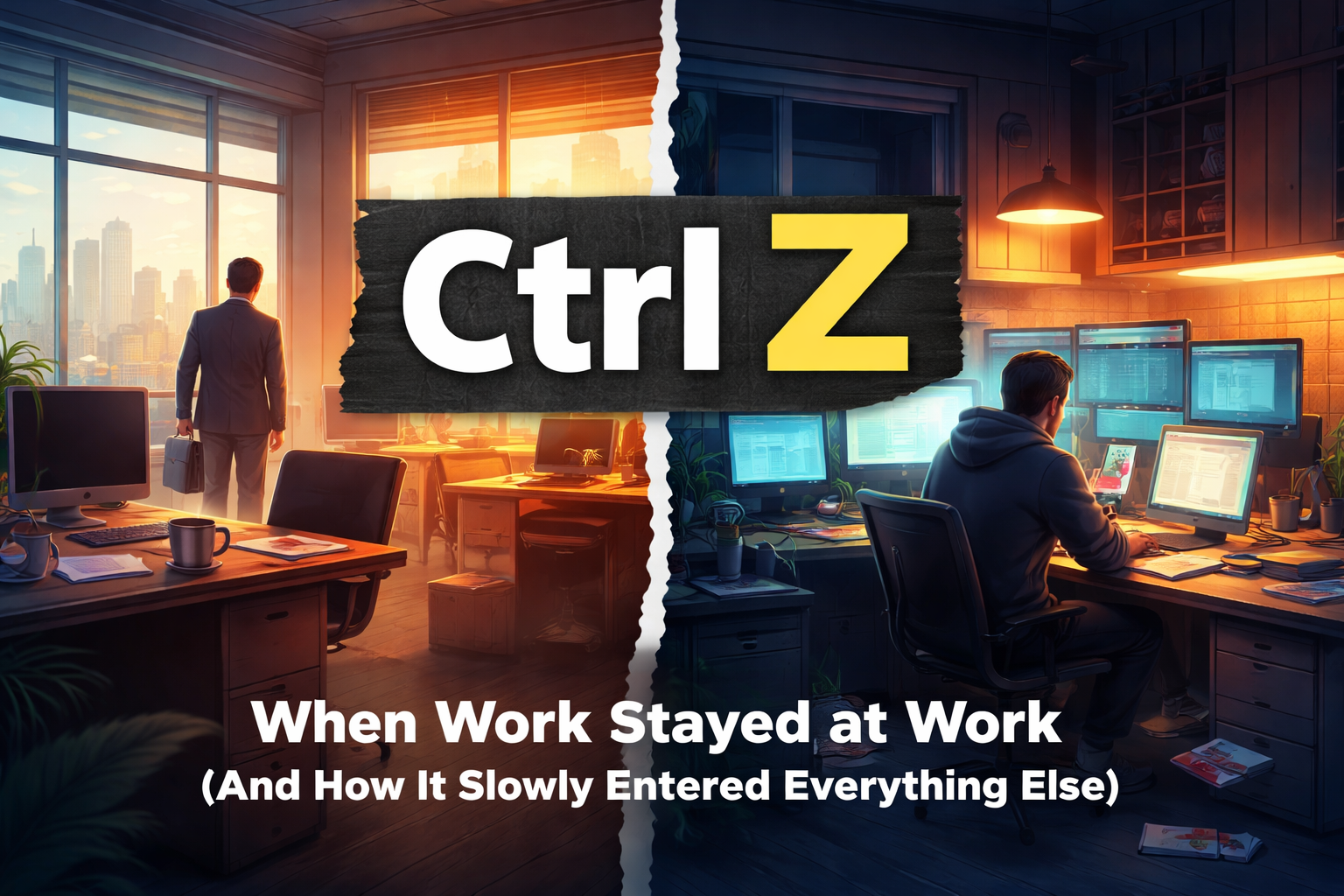
What Happens to a Moment When We Stop to Capture It?
A simple evening with old friends became a small reminder of how naturally lived moments
and carefully recorded moments do not always move in the same way.
Last weekend, I met a couple of old friends after a long time. There was no detailed planning behind it.
We just picked a place, fixed a time, and showed up. The kind of plan that doesn’t need coordination, just availability.
We ordered food, settled in, and the conversation started flowing almost immediately. It moved from one topic
to another without effort—old stories, current work, random observations. Nobody was checking their phones.
Nobody was in a hurry to leave.
At some point, someone suggested taking a picture. We got up, stood together, and clicked one. Then someone
asked for another because the angle could be better. Then one more because someone blinked. A few small adjustments
followed, and we ended up taking several versions before everyone felt okay with it.
We went back to our seats and picked up the conversation again. Everything continued, but the rhythm had changed
slightly. The conversation restarted instead of continuing from where it left off. It wasn’t a major shift,
just something you notice if you pay attention.
The photo turned out well. The moment had already moved on.
When Photos Were Occasional
For a long time, photos were tied to specific occasions. Trips, celebrations, and events naturally called for
a few pictures. Regular days passed without much documentation, and that felt complete.
You could meet someone, spend hours talking, and walk away without feeling the need to capture it.
The memory stayed with you in whatever form it took—clear in some parts, slightly faded in others.
That was enough.
Photos added value when they were taken, but they didn’t sit inside every moment.
How Sharing Became Part of the Process
As phones improved and social platforms became part of daily life, photos started carrying a different role.
They moved from being stored to being shared, and that shifted how they were approached. A picture began to
represent the moment beyond the people who were present. It became something that would be seen again later,
by others as well. Naturally, a little more attention went into how it looked.
That attention changed the timing. Capturing started happening during the moment instead of after it.
A quick pause became part of the flow.
Memory and Record
The act of taking a photo is simple, but it brings a brief shift in focus. Attention moves toward the screen,
toward getting the frame right, toward checking how it turned out. During those few minutes, the moment continues
in the background, but the engagement changes. Conversations pause and then restart. The flow adjusts.
Everything still happens, but in slightly separate parts instead of one continuous stretch.
A memory holds what stood out—the tone of a conversation, a particular detail,
a feeling attached to the experience.
A recorded moment stays exact. It shows the scene as it appeared, with clarity and detail.
Both have value. They simply hold different versions of the same experience.
Ctrl Z Moment
When you look at it closely, nothing about that evening felt unusual while it was happening. The conversation
flowed the way it usually does when you meet people you’re comfortable with. There was no effort in keeping it
going, no interruptions that stood out, and no reason to think about anything beyond what was happening at that table.
The moment we paused for the picture didn’t feel important either. It was just something that fit naturally
into the flow. Everyone stood up, adjusted themselves slightly, and spent a few minutes getting it right.
At that point, it felt like a normal part of meeting after a long time, something almost expected.
What becomes noticeable is not the act itself, but the small shift around it. The conversation didn’t continue
from the exact point where it stopped. It had to restart, even if only slightly. The energy didn’t drop,
but it changed form for a brief moment before settling again.
That’s the part that usually goes unnoticed. The action feels normal, but the change it introduces is subtle
enough to pass without attention. Over time, these small pauses become part of how moments are structured,
even when they were never intended to be.
Later, when I looked at the pictures, they were exactly what you would expect—clear, well-framed, and presentable.
Anyone looking at them would assume it was a perfectly captured moment.
But the experience behind them was different.
What stayed with me wasn’t the image, but the process that led to it. The small push to make it happen,
the time it took, and the way the moment had to pause and adjust around it.
The rest of the evening didn’t need any of that. It moved naturally, without effort or planning.
That contrast is easy to ignore in the moment. It becomes clearer only when you step back and think about it.
My Perspective
I see this happening everywhere now, not just in small gatherings like this.
Walk through any public place—a street, a park, a cafe—and you’ll find people setting up cameras,
asking others to move aside, repeating actions until it looks right. Entire moments are built around
recording instead of experiencing. It’s no longer about remembering something later. It’s about presenting it immediately.
And that’s where it starts feeling unnecessary.
When a group is together, not everyone is there for the same reason. Some people want to talk,
some want to relax, some just want to spend time without thinking about anything else.
Turning that into a staged activity, especially when everyone isn’t equally interested, feels forced.
A single picture at the end of a good evening makes sense. It captures something that has already happened.
But stretching that into a series of poses, retakes, and adjustments changes the nature of the moment itself.
There’s also a pattern behind this behavior.
Research from the American Psychological Association (APA) has pointed out that frequent social media sharing
is often linked to validation-seeking behavior and self-presentation pressure, where the focus shifts toward
how an experience appears rather than how it feels. Another study published in the Journal of Consumer Research
highlights that when people focus on capturing an experience extensively, it can reduce their enjoyment and
engagement in that moment.
These are not extreme cases. They’re common patterns. That’s why it stands out.
Because the impact isn’t always loud or disruptive. It shows up quietly in moments that feel slightly altered,
slightly staged, slightly less natural than they could have been.
For me, the point of meeting people is simple. It’s about the conversation, the comfort, and the time spent
without needing to document it constantly.
Everything else should come after that.
References
- American Psychological Association — research on social media behavior, self-presentation, and validation patterns.
- Journal of Consumer Research — findings on how extensive capturing can affect present-moment enjoyment and engagement.